
As I look back at my gaming journey over the past decades, I can't help but marvel at how certain games didn't just continue their franchises—they completely reinvented them. These weren't mere sequels; they were bold declarations that gaming evolution sometimes requires breaking from tradition. I've experienced firsthand how these transformations can redefine what we expect from our favorite series, and looking ahead to 2025, their impact continues to shape the industry.
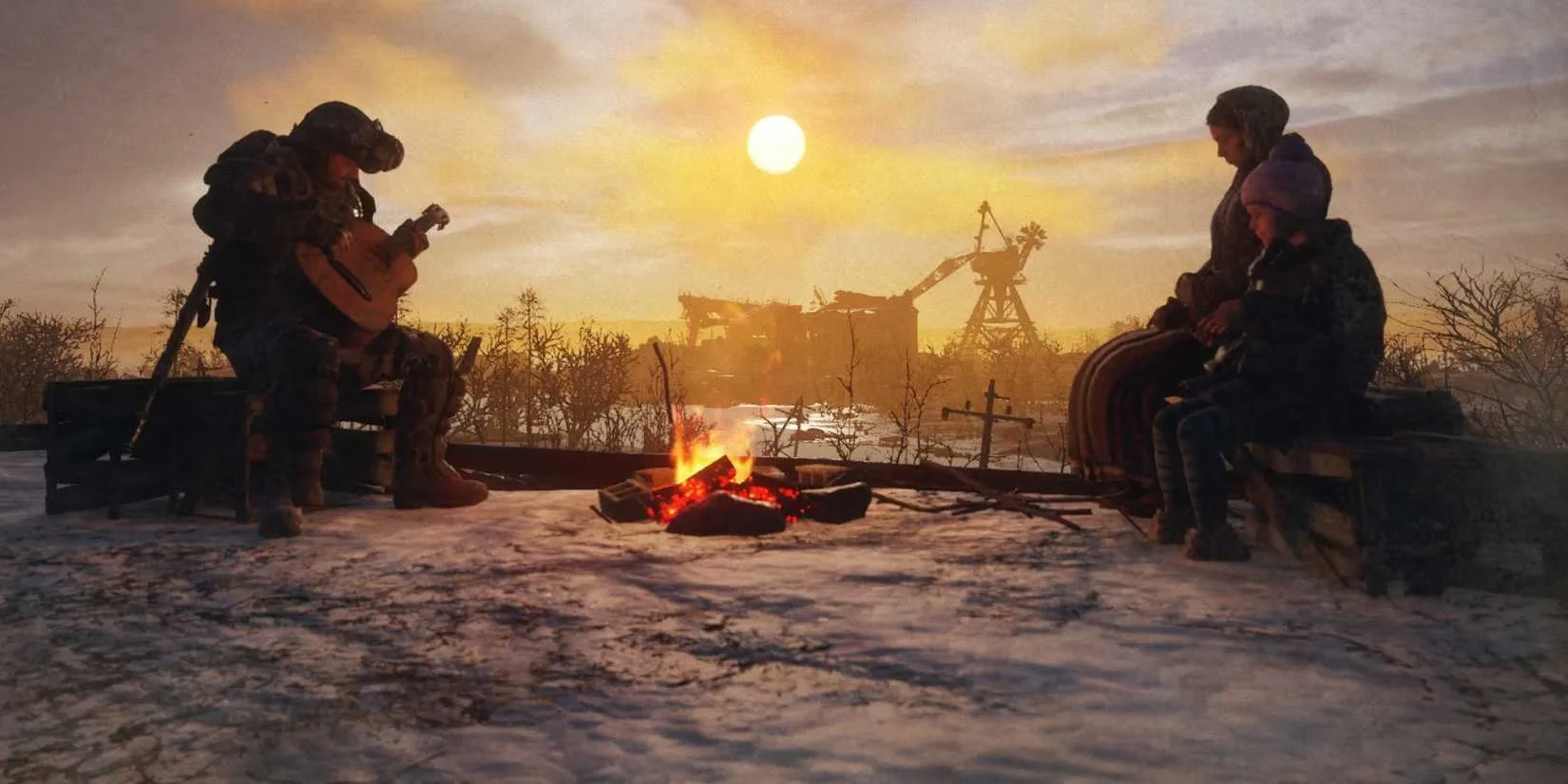
10 Metro Exodus: From Tunnels to Vast Horizons
I remember playing the original Metro games, feeling the claustrophobic tension of navigating post-nuclear tunnels. But when I booted up Metro Exodus in 2019, I was genuinely shocked. 4A Games completely abandoned the linear horror formula that made the series famous. Instead, they gave us sprawling open-world maps where survival meant more than just shooting mutants. The absence of traders, the dynamic weather systems, and the sense of genuine exploration made this feel like a completely different franchise. Some purists complained, but I found the fresh approach revitalizing—proof that sometimes the biggest risks yield the most memorable experiences.
9 Fallout 3: When Bethesda Went Nuclear
Having played the original isometric Fallout games, I never imagined how radically different the series could become. Then came Fallout 3 in 2008, and suddenly everyone was calling it "Nuclear Oblivion"—and they meant it as the highest compliment. Bethesda transformed Fallout from a strategic RPG into an immersive first-person survival experience. The Capital Wasteland felt alive in ways the original games never could, despite their charm. The revolutionary VATS system, the environmental storytelling, and the sheer scale of exploration made me forget about the sometimes-clunky combat. This wasn't just a new Fallout game; it was a new genre entirely.
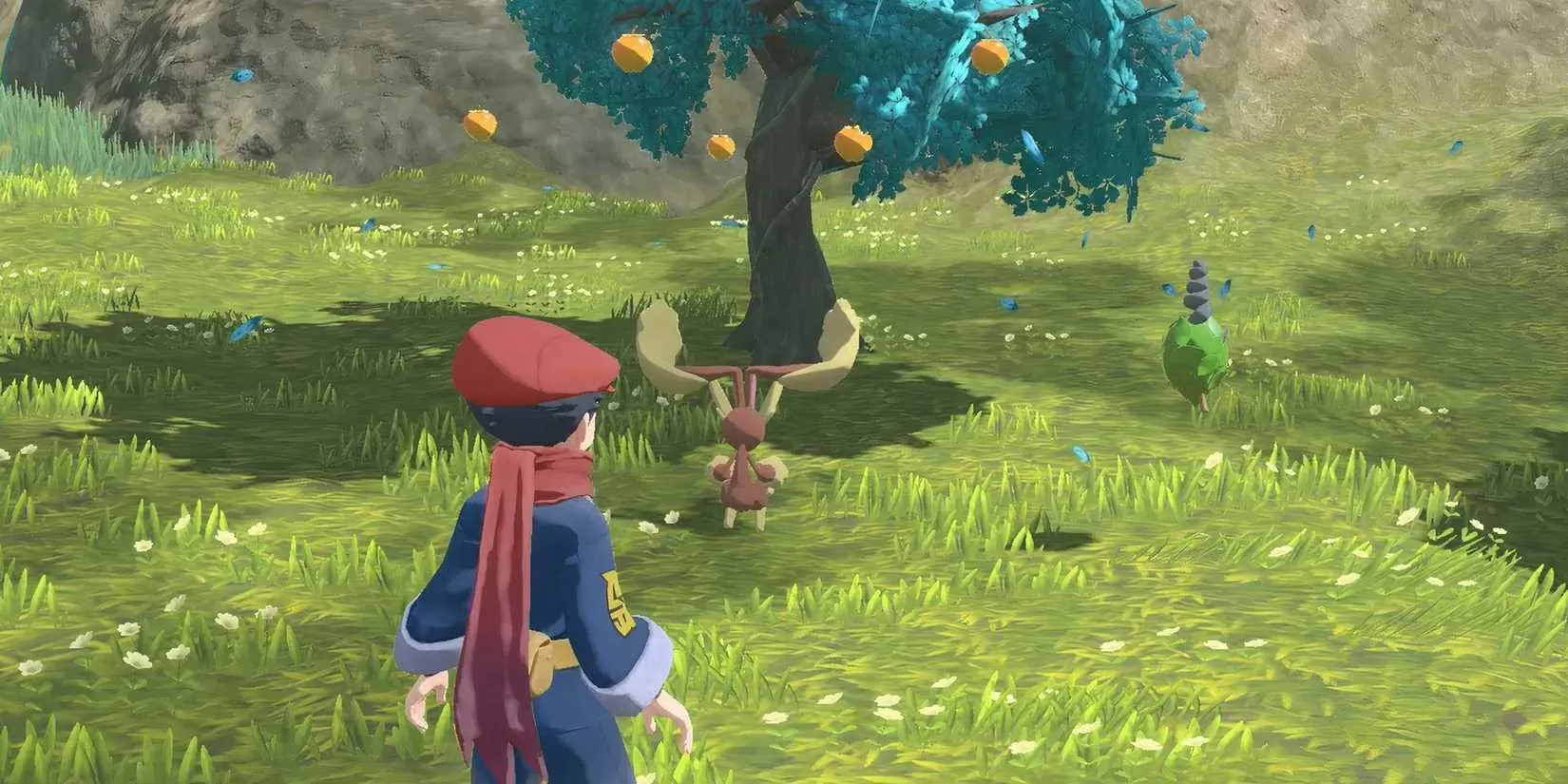
8 Pokémon Legends: Arceus: Breathing New Life into a Classic
I've been catching Pokémon since the Red and Blue days, following the same basic formula for decades. Then Pokémon Legends: Arceus arrived in 2022 and completely shattered my expectations. This wasn't just another Pokémon game—it was the Breath of the Wild moment the franchise desperately needed. The ability to actually see Pokémon in the wild, the research-focused gameplay, and the freedom to explore ancient Hokkaido transformed the core experience. For the first time, I felt like a genuine Pokémon researcher rather than just a trainer following a linear path. The risk paid off magnificently, proving that even the most established formulas can benefit from radical reinvention.
What Made These Transformations Work:
-
Bold Departures: Each game abandoned core mechanics that defined their predecessors
-
Technological Leaps: They leveraged new engines and hardware capabilities
-
Player Freedom: Linear experiences gave way to open-ended exploration
-
Fresh Perspectives: New development teams brought different visions
7 Assassin's Creed Origins: The RPG Revolution
After playing nearly a dozen Assassin's Creed games following the same basic template, I was growing fatigued. Then Origins arrived and completely revitalized my love for the series. Ubisoft didn't just tweak the formula—they rebuilt it from the ground up. The shift to RPG mechanics, the massive open world of ancient Egypt, and the Souls-inspired combat system created something entirely new. This was the first time an Assassin's Creed game felt less about historical accuracy and more about pure, unadulterated fun. The Pandora's Box they opened continues to influence the series today, for better or worse.
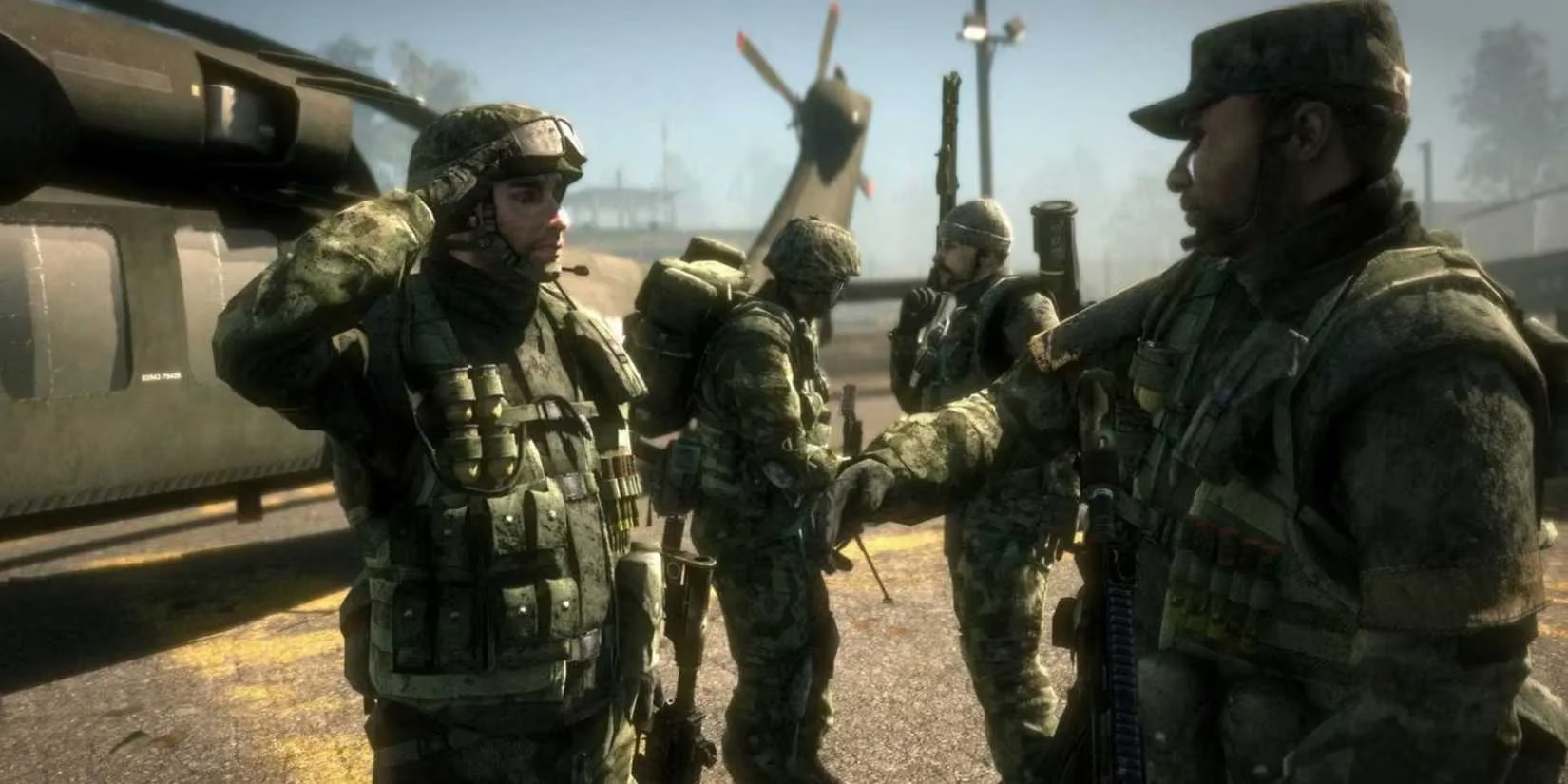
6 Battlefield Bad Company: Giving War a Personality
I'll never forget my first experience with Bad Company. After years of Battlefield games focusing exclusively on multiplayer, here was a campaign that actually had character—both literally and figuratively. The Frostbite engine destruction, the humorous writing, and the memorable squad dynamics created a single-player experience that Battlefield had been missing for years. This wasn't just a series of bot matches disguised as a campaign; it was a genuine narrative adventure that stood on its own merits. The success of this approach paved the way for Battlefield 3's acclaimed campaign and left me hoping future entries would recapture this magic.
5 Star Wars Jedi Knight II: Jedi Outcast: The Force Awakens
As a Star Wars fan since childhood, I thought I knew what to expect from a Jedi game. Then Jedi Outcast arrived in 2002 and redefined lightsaber combat forever. The transition from 2D to full 3D environments using the ID Tech 3 engine was revolutionary enough, but the realistic lightsaber combat—where blades could actually dismember enemies and burn through walls—was genuinely groundbreaking. The Force powers felt powerful and authentic, and the semi-open world design gave me unprecedented freedom in a Star Wars game. Kyle Katarn remains one of the franchise's most compelling characters, and this game's influence can still be felt in modern Star Wars titles.
Franchise Transformations That Changed Gaming:
| Game | Before Transformation | After Transformation | Impact |
|---|---|---|---|
| Metro Exodus | Linear horror | Open-world survival | Redefined series identity |
| Fallout 3 | Isometric RPG | First-person exploration | Created new genre standard |
| Pokémon Arceus | Linear progression | Open-world research | Modernized 25-year formula |
| GTA 3 | Top-down driving | 3D open world | Revolutionized entire industry |
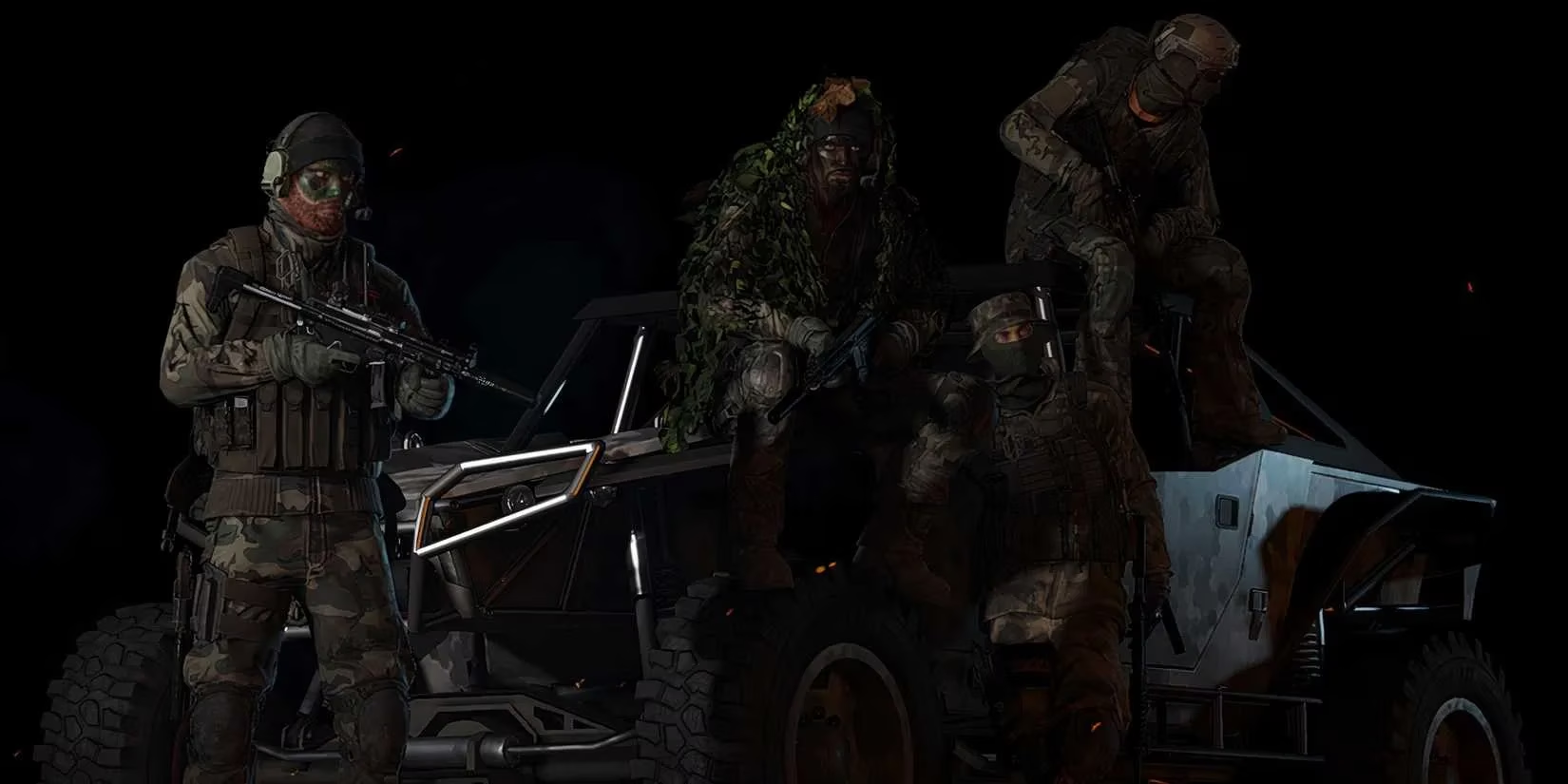
4 Ghost Recon Wildlands: Special Ops GTA
I've always enjoyed tactical shooters, but Ghost Recon Wildlands in 2017 completely changed my expectations. Ubisoft took the series from linear mission-based gameplay to the largest open world they'd ever created. Dropping into Bolivia with my three AI teammates (or real friends) felt like playing a tactical version of Grand Theft Auto. The freedom to approach objectives however I wanted, the beautiful diverse landscapes, and the gritty narco-war storyline created an experience that felt both authentic and liberating. This was special operations gaming at its finest—tense, strategic, and endlessly replayable.
3 Final Fantasy VII: The JRPG Revolution
When I first played Final Fantasy VII in 1997, I knew gaming would never be the same. The shift from medieval fantasy to cyberpunk dystopia was shocking enough, but the cinematic presentation, complex characters, and mature themes elevated RPGs to new heights. Cloud Strife's journey through Midgar became the benchmark against which all future RPGs would be measured. The environmental commentary feels even more relevant today than it did nearly three decades ago. The fact that this game spawned an entire compilation of sequels, prequels, and now a groundbreaking remake series speaks volumes about its transformative impact.
2 Helldivers 2: From Niche to Phenomenon
I played the original Helldivers back in 2015 and enjoyed it as a fun cooperative distraction. But nothing prepared me for the cultural phenomenon that Helldivers 2 became in 2024. The shift from top-down to third-person perspective completely transformed the experience. Suddenly, I wasn't just controlling a little soldier from above—I was in the trenches, fighting for managed democracy with bloodlust and patriotic fervor. The seamless integration of Starship Troopers-inspired satire with genuinely excellent gameplay created something that felt both familiar and entirely fresh. This transformation proves that even smaller franchises can achieve massive success by daring to reinvent themselves.
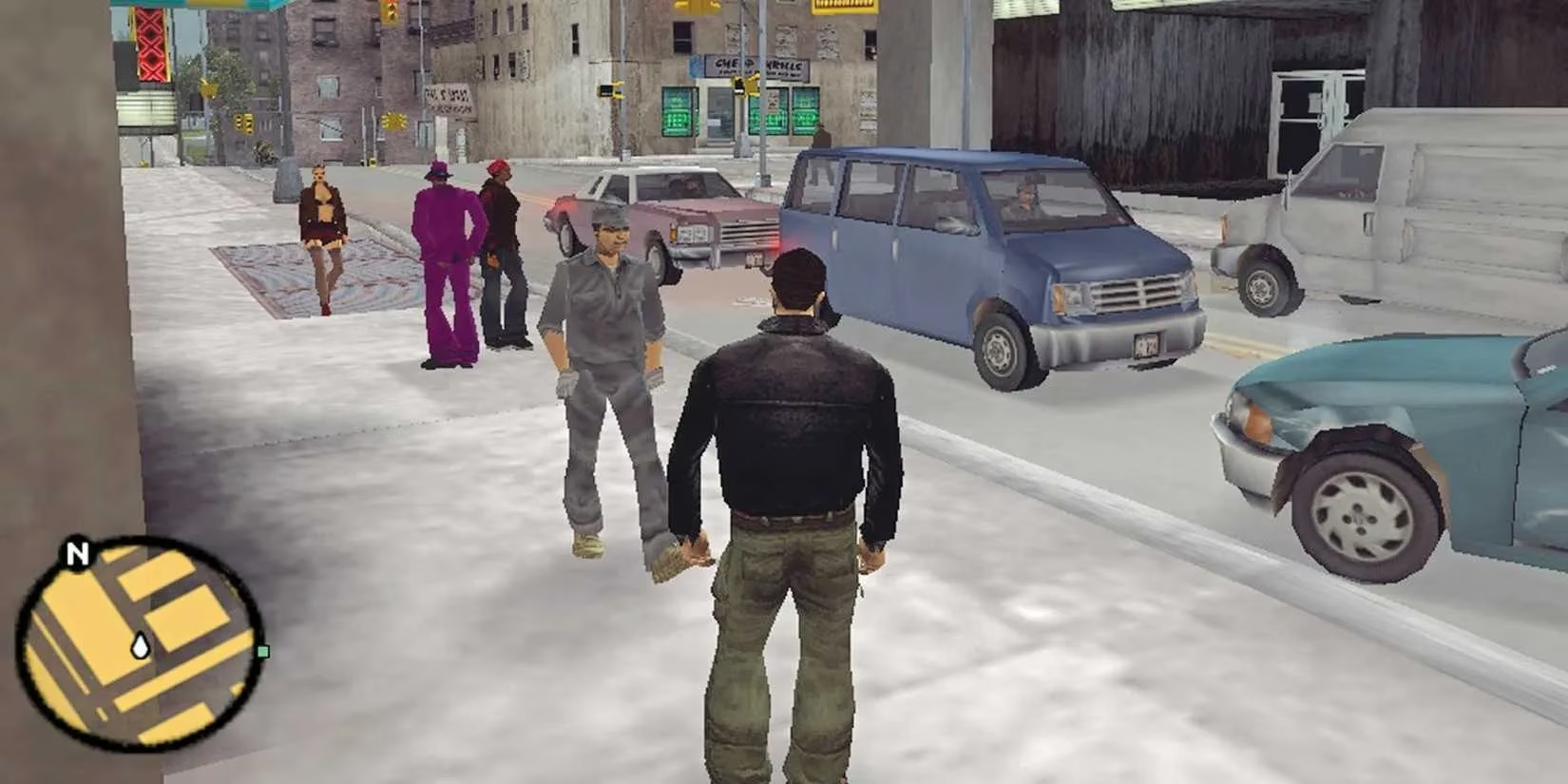
1 Grand Theft Auto 3: The Game That Changed Everything
No franchise transformation has ever impacted gaming as profoundly as Grand Theft Auto 3. I remember playing the top-down original games and enjoying them as simple car theft simulators. Then GTA 3 arrived in 2001 and showed us what open-world gaming could truly be. For the first time, I could freely explore a living, breathing city in 3D, interacting with pedestrians, causing chaos, and experiencing a criminal underworld narrative that felt genuinely cinematic. The technological achievements were staggering for their time, but more importantly, GTA 3 created a template that countless games would follow for decades. It didn't just transform its own franchise—it transformed the entire industry.
Key Lessons from These Transformations:
-
🎯 Don't be afraid to abandon successful formulas
-
🌟 Technological innovation should serve creative vision
-
🔄 Player expectations can be reshaped with quality execution
-
💡 Sometimes the biggest risks yield the greatest rewards
Looking back at these transformative titles as we move through 2025, I'm reminded that the most exciting moments in gaming often come when developers dare to break from tradition. These games didn't just give us new entries in familiar series—they gave us entirely new ways to experience interactive entertainment. Their legacy continues to inspire developers to take creative risks, and as a player, I can't wait to see which franchise will undergo the next great transformation.