
The Call of Duty community has never been shy about dreaming up new ways to personalize their arsenals, and one concept from 2023 continues to echo through forums and social platforms well into 2026. The idea: giving players the freedom to mix and match weapon camos, applying different patterns to individual parts of a gun or even dual‑wielded weapons. As the next major Call of Duty release approaches, the conversation around deeper weapon customization is louder than ever.
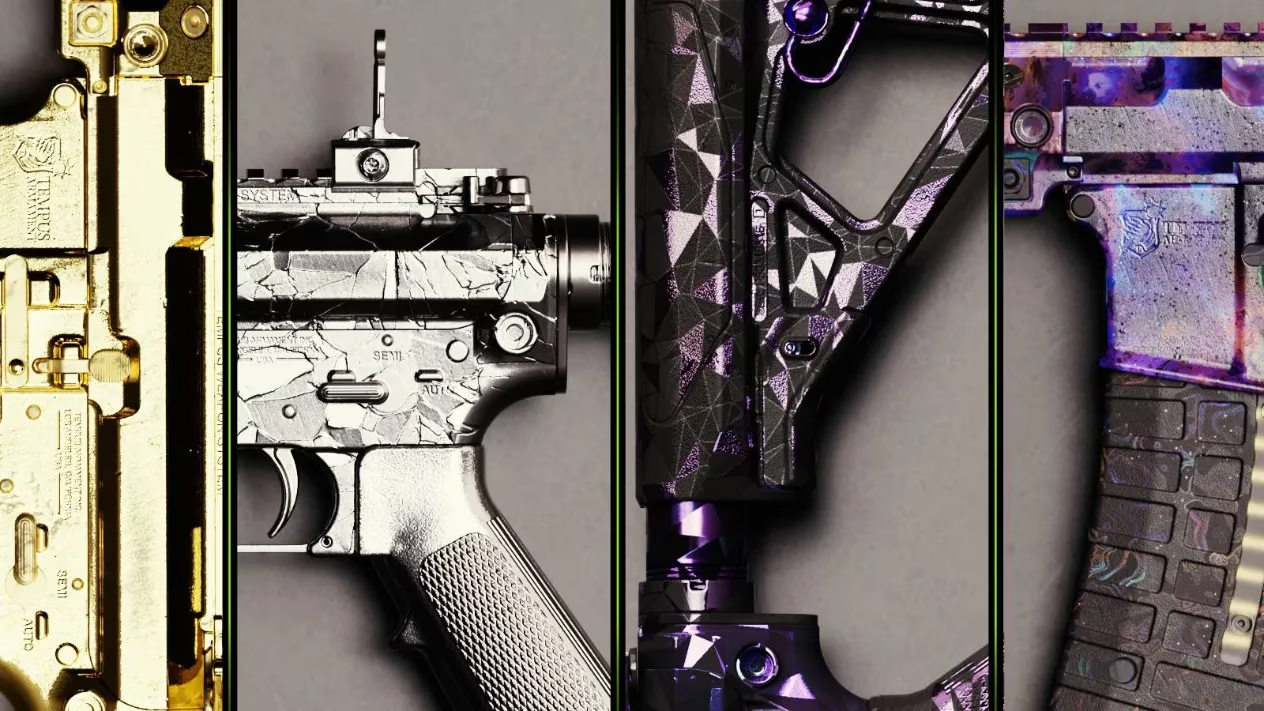
Back in late 2023, Reddit user u/JimJamSandwich ignited the discussion with a mockup showing dual pistols, each sporting a completely different camouflage finish. The image quickly went viral within the hardcore player base, with commenters praising the potential for unprecedented personal expression. The concept wasn’t just about looking flashy—it was about allowing operators to tailor their equipment to fit both aesthetic preferences and tactical environments. In the years since, numerous fan‑driven wishlists have placed camo blending at the top of desired features.
The franchise’s history shows that Activision and its rotating cast of developers have occasionally embraced risky, creative ideas. The latter half of Modern Warfare II’s lifecycle saw pop‑culture crossovers with Nicki Minaj, Lara Croft, 21 Savage, and even characters from The Boys. The viral TikTok NPC trend also found its way into the game as a limited‑time mode. These additions proved that the developers were willing to experiment with unconventional content. Yet, fundamental weapon customization—such as blending camos—remained elusive even in Modern Warfare III (2023), despite that title reintroducing several fan‑requested mechanics.
Modern Warfare III brought back map voting, dolphin diving, and a polished version of classic maps like Rust and Terminal. It also signaled a renewed willingness to listen to the community. However, the camo mixing dream stayed on the shelf. As of 2026, with the next premium Call of Duty reportedly targeting a holiday release, the question on many minds is whether this generation of development teams will finally deliver.
Why Camo Mixing Matters Now More Than Ever
The appeal of blending patterns goes beyond vanity. Consider the following points that the community frequently raises:
-
Operational Realism: Modern militaries often use mismatched camouflage to break up silhouettes or blend into varied environments. Allowing players to replicate that philosophy would add a layer of tactical immersion.
-
Identity Expression: In an era where operators can be customized down to their watches and gloves, rigid weapon coatings feel restrictive. A player who has grinded for mastery camos in different categories could display multiple achievements on a single firearm.
-
Blueprint Synergy: There have been persistent calls for mixing weapon blueprint elements—combining the stock of one variant with the barrel shroud of another. Camo mixing would be a natural extension of that vision, creating a fully modular armory experience.
Data miners and leakers have hinted that the next Call of Duty engine, likely an iteration of the updated IW engine, is being built with more granular item customization hooks. While none of these leaks are official, they fuel speculation that camo blending might finally be technically feasible without breaking the game’s progression economy.
The Long Road of Community Feedback
It’s important to remember that features like map voting and theater mode disappeared for years before returning. Call of Duty’s development cycles—often split between Infinity Ward, Sledgehammer Games, and Treyarch—mean that player feedback can take a long time to surface in a finished product. The noise around camo mixing has been sustained for three years, making it one of the few player‑made concepts to maintain momentum across multiple title launches.
A 2025 survey reportedly sent to select Call of Duty insiders included a question about “advanced weapon appearance customization,” which many interpreted as a probe into camo selection options. Although Activision never commented publicly, the timing aligns with pre‑production phases of the 2026 title. If implemented, a system could mirror the separate camo slots seen in games like Rainbow Six Siege, where players can assign different skins to the weapon body, magazine, scope, and barrel.
The Current Landscape and What’s Next
As we stand in early 2026, the most recent mainline entry remains Call of Duty: Modern Warfare III, though its live‑service updates have continued with seasonal content. The undead‑themed Zombies mode—a first for the Modern Warfare sub‑series—drew substantial praise and demonstrated the developers’ willingness to break franchise norms. That creative energy, combined with the persistent camo‑mixing discourse, creates an environment where the idea feels more plausible than ever.
Industry analysts point out that cosmetic customization drives significant revenue through battle passes and store bundles. A camo blending system could be monetized subtly—offering unique “blending keys” or exclusive pattern zones in bundles—while still granting free‑to‑play players basic mixing abilities. Such a model would satisfy both the community and the publisher’s bottom line.
The competitive scene would also benefit. In Call of Duty League matches, where weapon choices are restricted to certain attachments, a standardized camo mixing rule could allow pros to retain individuality without impacting competitive integrity. Organizations could design signature blended patterns, adding a fresh layer of branding.
Ultimately, the original Reddit post from 2023 planted a seed that has yet to fully sprout. With every passing year, Call of Duty’s customization suite grows deeper—operators have skins, finishers, vehicle wraps, and more. The next logical frontier is the weapon itself. Whether the 2026 title delivers remains to be seen, but one thing is certain: the call for camo mixing is no longer just a niche request. It has become a symbol of what the community believes a truly personalized arsenal should look like.