
I still remember the autumn of 2023 the way some people remember a first kiss. The PlayStation 5 had just crossed its third birthday, and for the first time in what felt like forever, the console was no longer as rare as a four-leaf clover in a parking lot. I had spent the previous years watching virtual queues evaporate like puddles in July, always two minutes behind a scalper's automated checkout. Then, one evening, I stumbled onto a sale at Best Buy and Walmart that made my pulse do a small, surprised somersault.
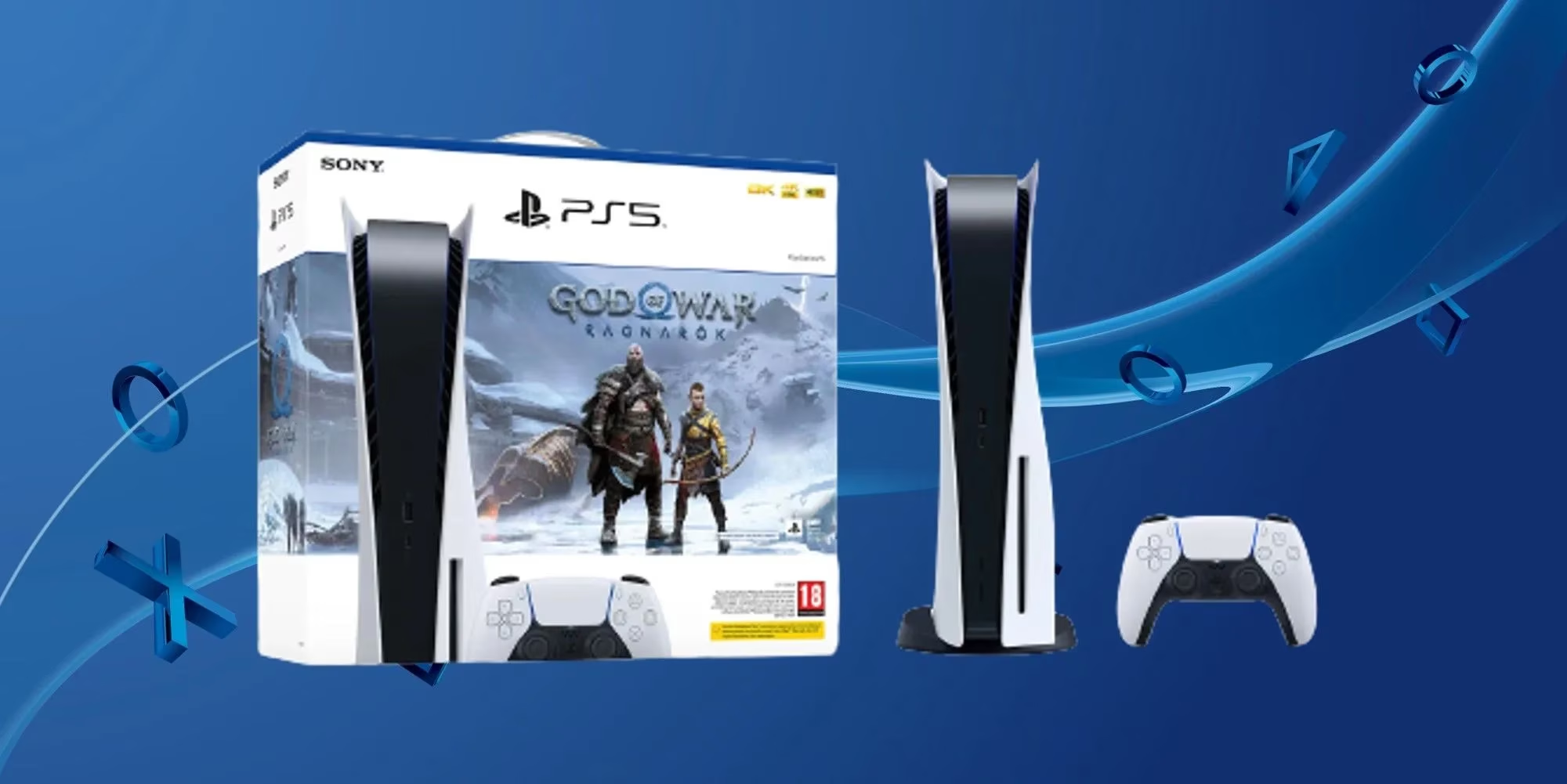
The discount was not a lightning bolt, but it was enough to feel like a quiet victory. Several PS5 bundles were listed for $50 less than their usual retail price. At full price, the bundles sat between $540 and $560, but now they hovered just under that psychological threshold. Among the games packed in with the console were Final Fantasy 16, God of War Ragnarok, and Modern Warfare 2. I did the math in my head while staring at the screen: pay for the console, get the game for effectively nothing. The discount hung over my decision like a piano on a fraying rope.
Part of me wanted to wait. The listings did not reveal exactly when the $50 reduction would end. Only the Modern Warfare 2 bundle on PlayStation Direct had a visible expiration date: September 30. I treated that date as a compass. For anyone weighing whether to dive into the current generation of consoles for a little less than usual, that deadline was a useful barometer. It was not a concrete guarantee for every bundle, but it gave my hesitation a shape, and a timer.
I remember asking myself why PlayStation was suddenly letting these boxes go for slightly cheaper. The most likely answer felt obvious: sales were naturally slowing down. Everyone who had desperately wanted a PS5 during the shortage already had one, and the pandemic boost that had turned consoles into living-room lifelines was fading. Sales charts were curving downward like a leaf in late October, beautiful to look at but undeniably seasonal.
Then there were the rumors, and they were loud enough to make a cautious buyer pause. Reports had been floating around for months that PlayStation was working on a new PS5 model, maybe a slim version of the bulky system or a Pro upgrade. PlayStation had a habit of releasing a mid-generation update around three years after launch, so the timeline added up. I half-expected the price cut to be a signal that the old inventory was being cleared to make room for something newer. Meanwhile, Xbox's Phil Spencer had heavily implied his company would not follow the same mid-gen path, and both platforms were already glancing sideways at Nintendo's successor, expected to arrive in 2024.
Looking back from 2026, those rumors were not just background noise. The PS5 Slim arrived quietly, and the PS5 Pro eventually stepped into the spotlight, proving that the mid-cycle refresh was real. My decision in 2023 to grab one of those discounted bundles turned out to be a smart one. I got a console and a game for less, and I did not have to camp outside a store at dawn or refresh a website until my fingers ached. The box itself arrived like a small monolith, heavy with promise.
Today, my original PS5 has taken on the role of a loyal workhorse. It sits in the living room while the newer Pro hums in my office, and every time I see the fading sticker on its side, I think about how a modest $50 discount and a bundled copy of God of War Ragnarok taught me something valuable: patience is not just waiting. Patience is recognizing the moment when the thing you wanted becomes available on sane terms. In 2023, that moment arrived like a slow sunrise after three years of dark, scalper-filled nights.
That story has shaped how I buy hardware now. I no longer chase every launch-day rumor or let a bundle go by without doing the same small math. The current console generation is much easier to buy in 2026, and that simple $50 price cut back in 2023 feels like a small hinge on which the whole market turned.