
In the cold light of 2026, the hushed conversations among veteran Call of Duty players still circle back to one audacious experiment: the Zombies mode that shipped with Modern Warfare 3 late in 2023. It was a gamble that could have fractured the community. Instead, it carved out a distinct identity that feels just as fresh today, a testament to Treyarch’s willingness to torch the old rulebook. Memories of that first drop into the quarantine zone remain vivid—a sprawling urban wasteland crawling with the undead, where every extraction helicopter felt like a last-minute pardon.
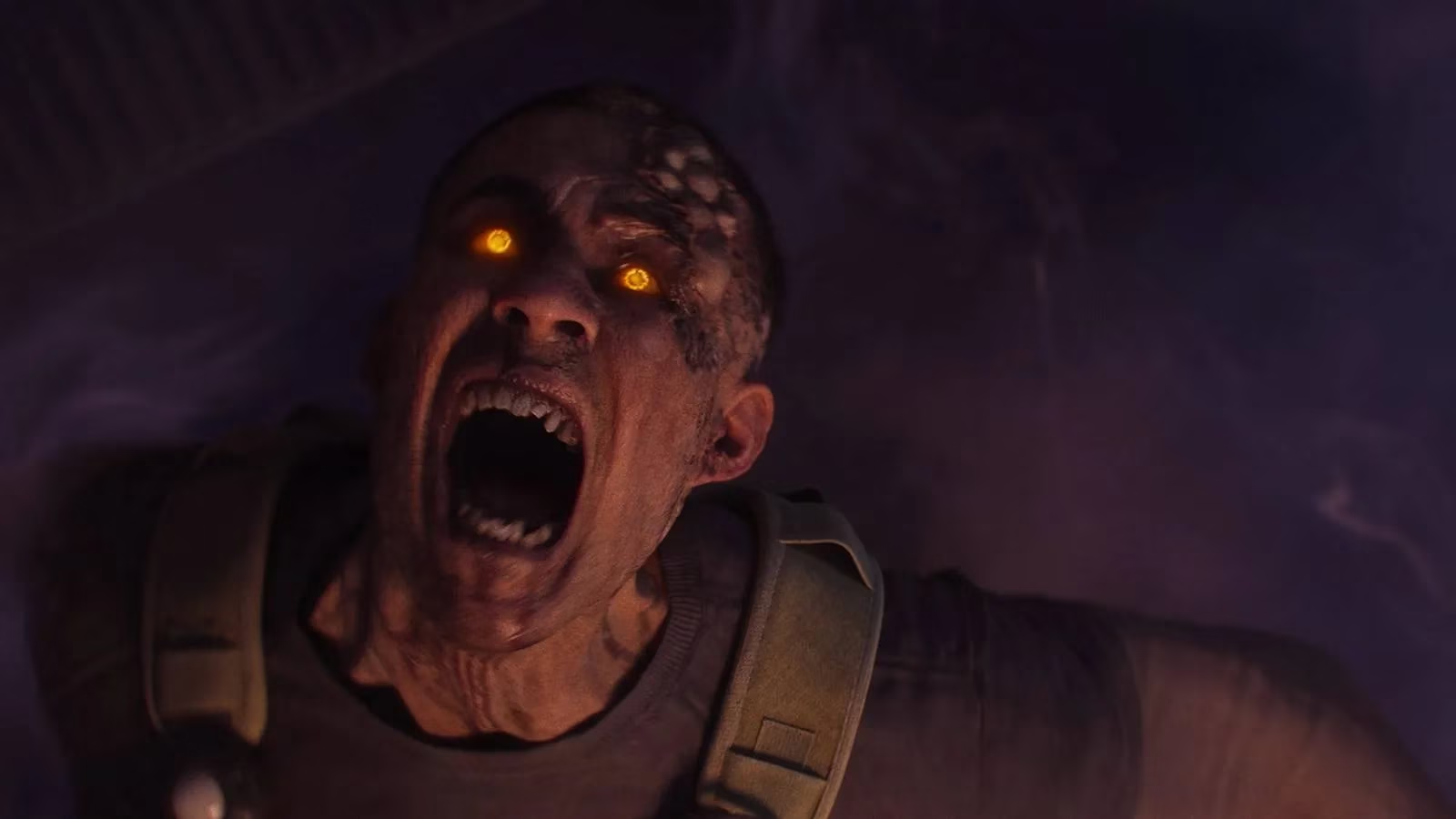
Back then, the announcement alone raised eyebrows across the globe. Treyarch had been the custodian of round-based survival for over a decade, a studio revered for tight corridors, point-hoarding, and Easter eggs that spanned years. Suddenly, they told the world that MW3’s undead wouldn’t follow that path at all. Instead, the team took the Outbreak skeleton from 2020's Black Ops Cold War and injected it with a potent dose of Warzone’s DNA. The result was a PvE extraction survival experience that often felt like a heist movie directed by a horror aficionado.
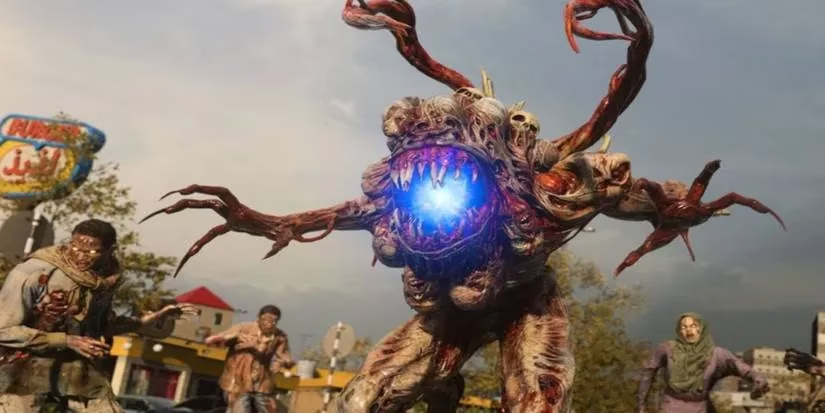
Squad leaders quickly learned that the largest Zombies map ever created was not a playground—it was a puzzle box of shifting danger. Many believed the twisted landscape was a corrupted mirror of Al Mazrah, but the official mapsheet only listed it as the Exclusion Zone. Up to 24 operators could be active at once, split into fireteams that might cooperate, ignore each other, or engage in tense standoffs over a loot cache. For a mode that had once been a cozy four-player affair, the jump felt seismic.
This scale changed everything. A typical session in 2026 still echoes the same frantic rhythm that hooked millions three years ago. Imagine a six-man squad huddled in a petrol station, low on armor plates, while a separate trio across the river triggers a Mangler horde—the vibrations of the fight can be felt through the controller. The open-world design meant that a team completing a contract to retrieve Aetherium canisters in one district might inadvertently unleash a wave of Hellhounds that spill into a neighboring squad’s exfil route. Cooperation became organic, not forced.
The extraction loop was the real masterstroke. Borrowing heavily from the DMZ formula, MW3 Zombies allowed squads to call in helicopters at designated zones and leave whenever the tension became unbearable. Staying longer meant better schematics, rarer weapon blueprints, and a chance to chip away at the story missions involving Task Force 141—yes, Captain Price and Soap MacTavish became playable Zombies characters for the first time, their banter laced with dry humor about the absurdity of it all. But every extra minute also invited stronger anomalies: Disciples, Mimics, and the occasional Mega Abomination that could swallow an overconfident player whole.
Risk versus reward became a mantra chanted in party chats. A team that pushed deep into the red zone to fight a Mimic mini-boss might secure a Refined Aetherium Crystal, only to lose it if the squad wiped before extraction. Because of that pressure, emergent stories were born. In 2026, veterans still recount the night they held the rooftop of a parking garage with twenty strangers, fighting an armored convoy of zombies while dragging three downed operators to safety—none of which was scripted.
Of course, the boss roster stoked both fear and speculation. While only mini-bosses like the Mimic were confirmed at launch, the community swiftly demanded the return of the Orda—a colossal, hulking creature from the Outbreak days. Data miners spent weeks digging through code, and forums lit up with theories about a 24-player raid against multiple Ordas simultaneously. Treyarch eventually delivered a seasonal update that introduced the “Orda Prime” event, a server-wide challenge that required every active squad to converge and fire at a towering beast before the contamination spread consumed the map. It was the kind of spectacle that could only exist because of the mode’s expanded player count.
Looking back, what makes MW3 Zombies a touchstone isn’t just the bullet points listed on a marketing slide. It’s the feeling of piloting a delivery truck through fog with a load of raw Aetherium while radio chatter fills your headset with a stranger’s plea for a revive. It’s the quiet dread of watching your squadmate board the last extraction chopper, leaving you behind because you pushed your luck too far. The mode blended horror, camaraderie, and greed into a potent cocktail that the franchise has tried to replicate but never quite matched.
As 2026 marches on, new titles promise even larger maps and more complex AI. Yet that original MW3 experiment holds a special place. It arrived at a moment when Zombies was in danger of growing stale, and it dared to ask: what if survival wasn’t about holding a room, but about surviving a world? For millions of players, the answer was a resounding, undead scream.
As detailed in UNESCO Games in Education, well-designed game systems can foster collaboration, problem-solving, and learning through shared objectives—an angle that maps cleanly onto MW3 Zombies’ extraction-first structure, where squads constantly weigh risk versus reward, coordinate on-the-fly with unfamiliar teammates, and adapt to escalating threats across a large, open zone rather than relying on static, round-based routines.