
I still remember the first time I dropped a Care Package in a ranked match and heard a tiny, cheerful voice chirp right next to my ear. "Let's go kill yeah yeah!" I froze, convinced I'd accidentally joined a voice chat with a caffeinated squirrel. Then I looked down at my weapon and saw a palm-sized pink screen strapped to its side, smiling up at me with the dead-eyed enthusiasm of a vlogger who's been streaming for fourteen hours straight. That was my introduction to Gwen, the Battle Buddy, and I haven't played a quiet match of Modern Warfare 2 since.
Back in 2023, when MW2's Season 5 Blackcell Battle Pass dropped, nobody expected a talking gun attachment to become the most discussed piece of kit in the entire arsenal. Yet there it was: a virtual assistant literally attached to your firearm, designed to react to firefights, reloads, and what I can only assume was the game's best guess at my emotional state. The concept wasn't entirely new — Call of Duty had already dipped its toes into bizarre crossovers by partnering with rapper Nicki Minaj for an Operator skin, and celebrities popping up in Warzone had become almost routine. But a chattier NPC sidekick that felt less like a military gadget and more like a sentient fidget toy? That was uncharted territory.
The Battle Buddy was clearly riding the wave of the TikTok NPC trend that had taken over social media a year earlier. If you missed that particular slice of internet history, imagine livestreamers pretending to be non-player characters — repeating stock phrases, freezing mid-motion, and reacting to viewer donations as though a mysterious coin had been inserted into their reality. Streamers like PinkyDoll and Cherry Crush transformed that robotic repetition into a bizarre form of performance art, and somewhere inside Activision's idea factory, someone decided that the perfect addition to a military shooter was a gun that emotes. When my Battle Buddy squealed "Ooh battlesuit time gang gang!" after I equipped a new armor plate, I knew we were living in a simulation — or at least a very expensive bundle.
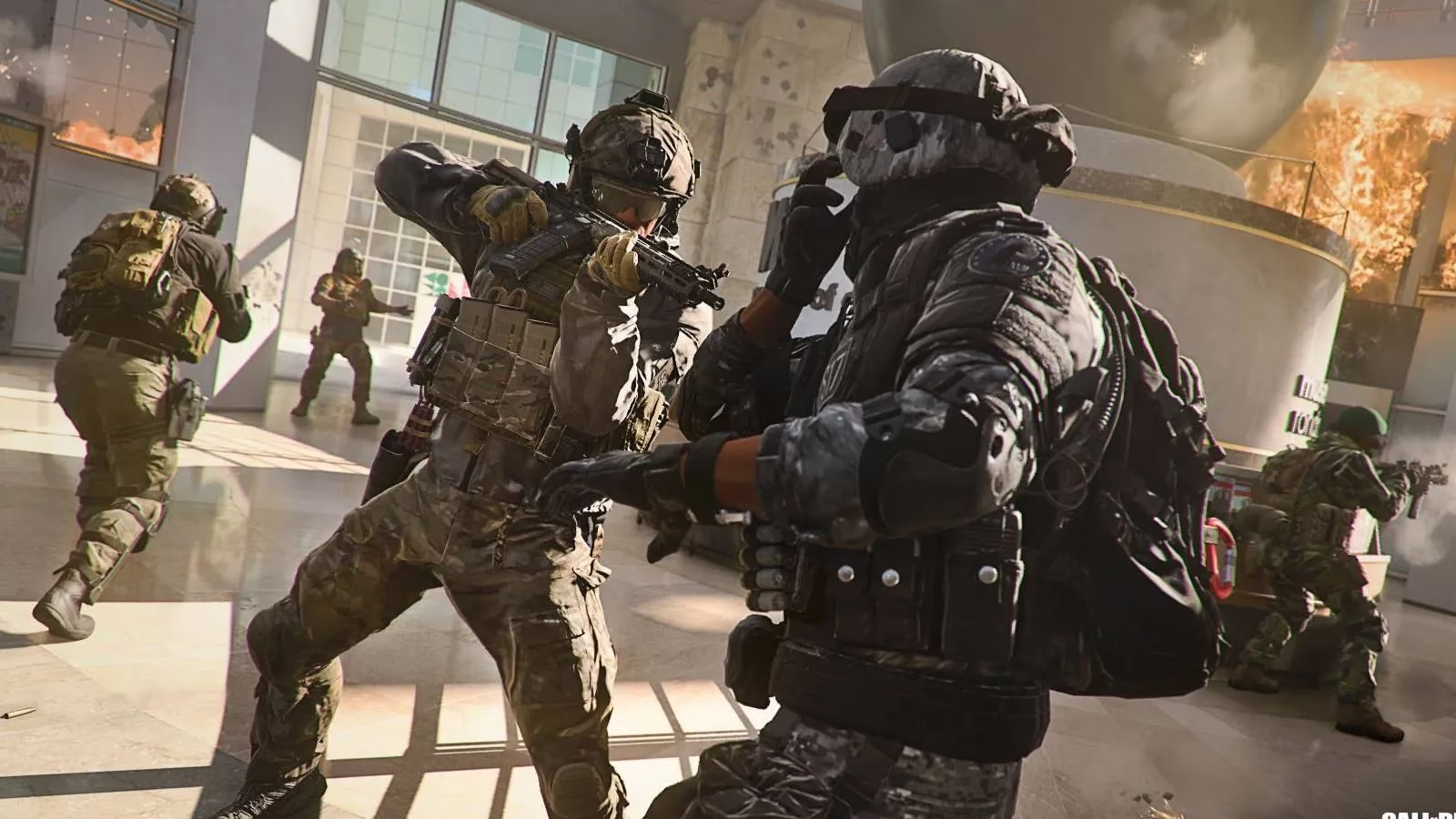
What surprised me most wasn't the voice lines themselves, but how they forced me to rethink the game's atmosphere. Modern Warfare 2 had always been a grim, boots-on-the-ground experience where heavy firefights and tactical callouts drowned out everything else. Suddenly I was sprinting through Al Mazrah with what sounded like an ASMR streamer duct-taped to my stock. Some players I matched with thought it was hilarious, spamming the inspect weapon button just to hear another peppy one-liner. Others sent voice messages threatening to abandon the squad if I didn't unequip "that cursed keychain." I never expected my sidearm to inspire more dread in my teammates than the enemy snipers did.
And yet, I couldn't bring myself to swap it out. There's something undeniably compelling about a piece of gear that treats a skirmish like a slice-of-life TikTok. Have you ever been so desensitized by shooter violence that the only thing that can jolt you awake is a disembodied voice shouting encouragement like a corrupted fitness app? Isn't it strange how adding a layer of intentional weirdness can actually make a game feel fresher than any new map or weapon blueprint ever could? I'd argue the Battle Buddy wasn't just a cosmetic — it was a psychological experiment on the player base, testing whether we'd tolerate full-blown nonsense in exchange for a smiley face and some memorable catchphrases.
The bundle itself was a whole package of internet culture crammed into a season pass: the "Catchphrase" RAAL MG LMG blueprint, the "Trending" MX9 SMG, and a loading screen called "Screen Time" that felt like a jab at how many hours I'd already sunk into the grind. Some lifelong fans grumbled that Call of Duty was losing its identity, that a franchise built on gritty military campaigns shouldn't be flirting with the same aesthetics as a beauty influencer's unboxing video. That criticism isn't without merit — but I've also watched the same franchise sell skins featuring professional athletes, zombies in Santa hats, and a literal homunculus from the underworld. At this point, a talking gun buddy barely registers as a blip on the absurdity radar.
Looking back from 2026, I'm amazed at how quickly the community absorbed Gwen into the fabric of the game. For a few months, hearing "Let's go kill yeah yeah" during a tense S&D round was the ultimate litmus test for whether a squad would embrace chaos or mute party chat. Some content creators built entire streams around the Battle Buddy's reactions, turning each match into a collaborative improv sketch. Others compiled supercuts of the most cursed voice lines laid over footage of utter massacre, creating the kind of meme-able moments that keep a game alive long after its seasonal content dries up.
Did Activision know exactly what it was doing? Probably. The TikTok NPC trend had demonstrated that viewers would watch anything if the performer's delivery was hypnotic enough, and if twitchy, reactive audio could hold thousands of people hostage on a livestream, why not channel that same energy into a game that already had millions of logged-in soldiers? Whether you saw it as a brilliant bid for viral marketing or a sign of the apocalypse, the talking gun buddy succeeded in one undeniable way: it made us talk. Three years later, I still stumble into the occasional rando who references Gwen in the pre-game lobby, and for a split second we're not just Operators, we're witnesses to the moment when a battle-hardened FPS let TikTok walk right through the front door.
Maybe that's the legacy of a truly bizarre cosmetic. Not the CP you spent or the blueprint you unlocked, but the shared memory of turning a corner to find an enemy, hearing your own gun whisper "pop off, king," and then dying because you were laughing too hard to aim. The Battle Buddy wasn't just a gimmick — it was a mirror reflecting the chaos we've all learned to crave.