
So, let me take you back to 2023. Call of Duty: Modern Warfare 3 was about to launch, and the biggest talking point wasn't a new campaign twist or a shiny new mode. It was the multiplayer map roster. All 16 launch 6v6 maps were remakes from 2009's Modern Warfare 2. As a longtime CoD player, I was hyped. Rust? Terminal? Highrise? Yes, please. But now, sitting here in 2026, I've had more than two years to watch how that nostalgia play actually worked out. And honestly? It's a mixed bag, like finding your favorite childhood candy but discovering the recipe changed.
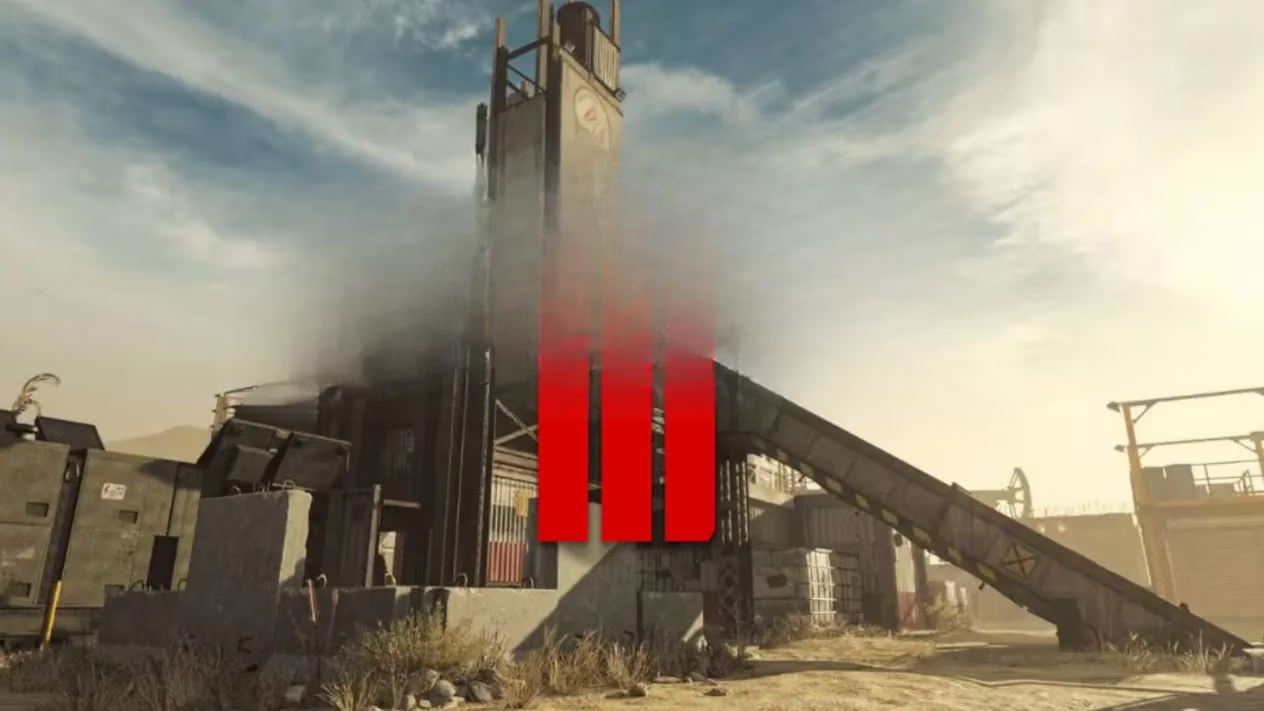
Let's start with the good. When MW3 launched on November 10, 2023, it gave us 16 6v6 maps right out of the gate. Compare that to 2019's Modern Warfare and 2022's Modern Warfare 2, which each only had 10 at launch. That's a huge difference. More maps means more variety, fewer repeats, and a better chance that everyone finds a favorite. And because these maps came from the golden era of MW2, they arrived with decades of goodwill baked in. Maps like Rust, Favela, Skidrow, and Terminal weren't just layouts—they were memories. For older fans, seeing them remastered felt like a reunion with old squadmates.
| Game | Launch 6v6 Maps |
|---|---|
| Modern Warfare (2019) | 10 |
| Modern Warfare 2 (2022) | 10 |
| Modern Warfare 3 (2023) | 16 |
But here's the catch, and it's a big one. The 2009 MW2 maps were designed for 2009 MW2 gameplay. That game was fast, arcadey, and chaotic in a way that modern Call of Duty just isn't. Modern CoD is more tactical, more methodical, with doors, mounting, tactical sprints, and slower movement. So when you drop a classic map like Rust into that framework, it can feel like putting a vintage racing engine into a hybrid sedan. The shape is familiar, but the soul is different.
I remember reading rumors before launch that many MW3 maps would add functional doors to certain buildings. On paper, that makes sense—doors help modern maps flow better and give players more cover options. But for veterans, doors on a classic MW2 map can feel wrong. It's like restoring an old painting and then adding a few extra brush strokes because you think the original missed a spot. You might improve the technique, but you also erase part of what made it special.
Now, in 2026, I can say the short-term boost was real. MW3's launch felt generous. Players who had complained about recent map quality suddenly had a roster full of proven classics. But the long-term problem also showed up. Nostalgia is a powerful drug, but it wears off. Once the initial 'oh wow, I remember this' feeling faded, some maps just didn't play the same. They were beautiful remakes, but the gameplay around them had changed. It's like using a 2009 paper map to navigate a city that has since added roundabouts, toll booths, and a dozen one-way streets. The map is still accurate in places, but it can't guide you the way it used to.
Here's what I think the MW3 map situation taught us:
👍 The good:
-
16 launch maps was a huge win for variety.
-
Classic maps brought instant nostalgia and familiarity.
-
Remastering gave lesser-known MW2 maps a second life.
-
More maps at launch meant healthier 6v6 rotation.
👎 The bad:
-
Modern CoD movement and mechanics clashed with old map design.
-
Added features like doors could dilute the original feel.
-
Reliance on nostalgia risked delaying fresh map innovation.
-
Veteran players might still feel disappointed by the translation.
So where does that leave us in 2026? I still play MW3 sometimes, and I still enjoy dropping into Rust or Terminal. But I also recognize that the map roster was a bandage, not a cure. It solved a launch-content problem, but it didn't solve the bigger question: what should a modern Call of Duty map feel like? Remakes are great as a supplement, but they shouldn't become the main course. If the series leans too hard on old maps, it starts to feel like a museum tour instead of a new adventure. And as much as I love the classics, I want new memories too.
Final thought: Modern Warfare 3's all-remake map strategy was a smart short-term move with a long-term warning label. It gave players what they thought they wanted, but it also showed how hard it is to make the old feel new again. In 2026, I'm grateful for the nostalgia, but I'm also ready for the next batch of maps that can stand on their own—no remaster required.