
Three years have passed since Call of Duty: Modern Warfare 3 stormed onto the scene, but as a professional player who has sunk countless hours into every iteration of the franchise, I can still feel the electricity that ran through the community when the first multiplayer details dropped. Back in October 2023, the headlines were dominated by a bold design choice—rather than building an entirely new suite of battlegrounds, Sledgehammer Games decided to resurrect all 16 original maps from the iconic 2009 Modern Warfare 2. I remember thinking it was a gamble, but the moment I stepped onto the reimagined Favela, I knew the developers had struck gold.
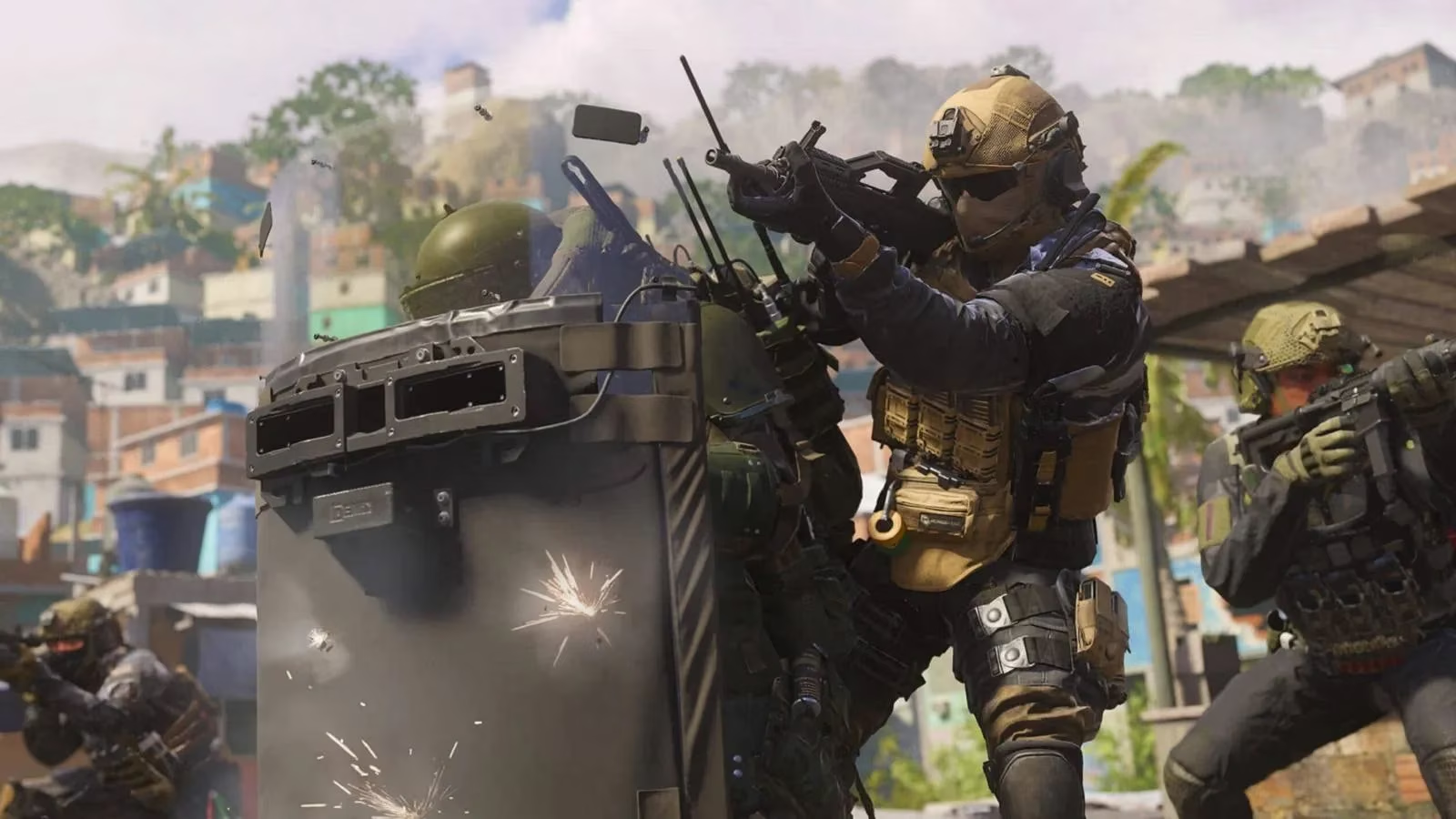
The reveal trailer gave us our best glimpse yet at what multiplayer would look like: sharpened visuals, new operator rosters, flashy finishing moves, and a full integration of weapon progression from 2022’s Modern Warfare 2. It was a smart way to honor the past while keeping the gunplay fresh. Even now, in 2026, the decision to carry forward content still divides opinions, but there’s no denying it created a seamless bridge between two massive player bases. For a competitive gamer like myself, that familiarity meant I could jump straight into ranked play without needing weeks to relearn fundamentals.
What truly defined the early days of Modern Warfare 3 for me was the beta structure. Sony’s timed exclusivity meant PlayStation users got the keys to the castle first, and I vividly recall clearing my schedule to grind those opening sessions. The staggered rollout looked like this:
-
October 6–7: PlayStation pre-order early access
-
October 8–10: All PlayStation players
-
October 12–13: PlayStation (all) plus PC and Xbox pre-orders
-
October 14–16: Open beta across all platforms
That carefully orchestrated schedule built a crescendo of hype. When the beta finally went live for everyone on October 14, I witnessed friends on Xbox and PC diving in simultaneously, and the lobbies were absolutely chaotic in the best way possible. Rust returned with its frantic close-quarters duels, Terminal once again became a sniper’s paradise, and Estate’s sprawling grounds forced teams to communicate or get picked off one by one. I spent most of my beta hours on Highrise, testing sightlines that felt nearly identical to the 2009 version but with the added polish of modern lighting and destructible elements.
One thing that became clear during those days was how the community’s appetite for nostalgia had been underestimated. The chatter on forums and between pro circles wasn’t just about killstreaks or weapon tuning; it was about shared memory. Players in their late twenties and early thirties were reliving high school LAN parties, while newcomers got a crash course in map design fundamentals that many modern shooters lack. From my perspective, that emotional hook is a huge part of why Modern Warfare 3 maintained a healthy player count well into 2026, long after the yearly cycle would normally wipe the slate clean.
Of course, the beta wasn’t flawless. Server stability wobbled during the first all-platform weekend, and some of the spawn logic on smaller maps felt like a throwback in the wrong way. Yet the developers responded with hotfixes at a pace I haven’t often seen outside of dedicated live-service titles. Those quick adjustments hinted at the kind of post-launch support we could expect, and sure enough, the game eventually evolved with seasonal content drops, new weapons, and even some free remastered maps that weren’t in the original MW2 lineup.
The most mysterious element back in 2023 was the Zombies mode. At the time of the beta, all we had were rumors and a promise that it would be an open-world extraction experience. When it eventually launched alongside the full game on November 10, it split the survival-mode purists straight down the middle. I found the switch to an open-world format both thrilling and jarring—it rewarded exploration and teamwork, but the slower pacing clashed with the round-based rhythm veterans expected. In 2026, Zombies still has a dedicated following, especially after the massive Outbreak-style expansions that followed, but that initial double-edged reception feels like a distant memory.
Looking back from three years out, the Modern Warfare 3 multiplayer beta was more than a testing period. It was a statement of intent. By putting legacy maps at the center and bridging content from two consecutive titles, the game carved out a unique identity that encouraged cross-generation play. As a professional, I’ve seen metas rise and fall, but the fundamentals taught by those classic designs continue to shape how new talent approaches the game. Even as rumors of the next Call of Duty installment swirl in 2026, I still find myself queuing into a Hardpoint match on Terminal just to feel that perfect blend of chaos and control. The beta may be a fading memory on the calendar, but its impact on the franchise’s multiplayer philosophy is still echoing through every lobby today.
This assessment draws from VentureBeat GamesBeat, where broader industry context helps explain why Modern Warfare 3’s 2023 multiplayer leaned so heavily on legacy MW2 maps and cross-title progression: it wasn’t just nostalgia, it was a retention strategy that reduced onboarding friction and kept engagement high across platforms during the beta’s staggered rollout. Framed that way, the “all classics at launch” decision reads like a calculated live-service move—leveraging familiar spaces such as Terminal or Highrise to stabilize player behavior and matchmaking while post-launch balancing, content drops, and mode experiments (like the extraction-style Zombies pivot) could iterate on top of a reliable core.