
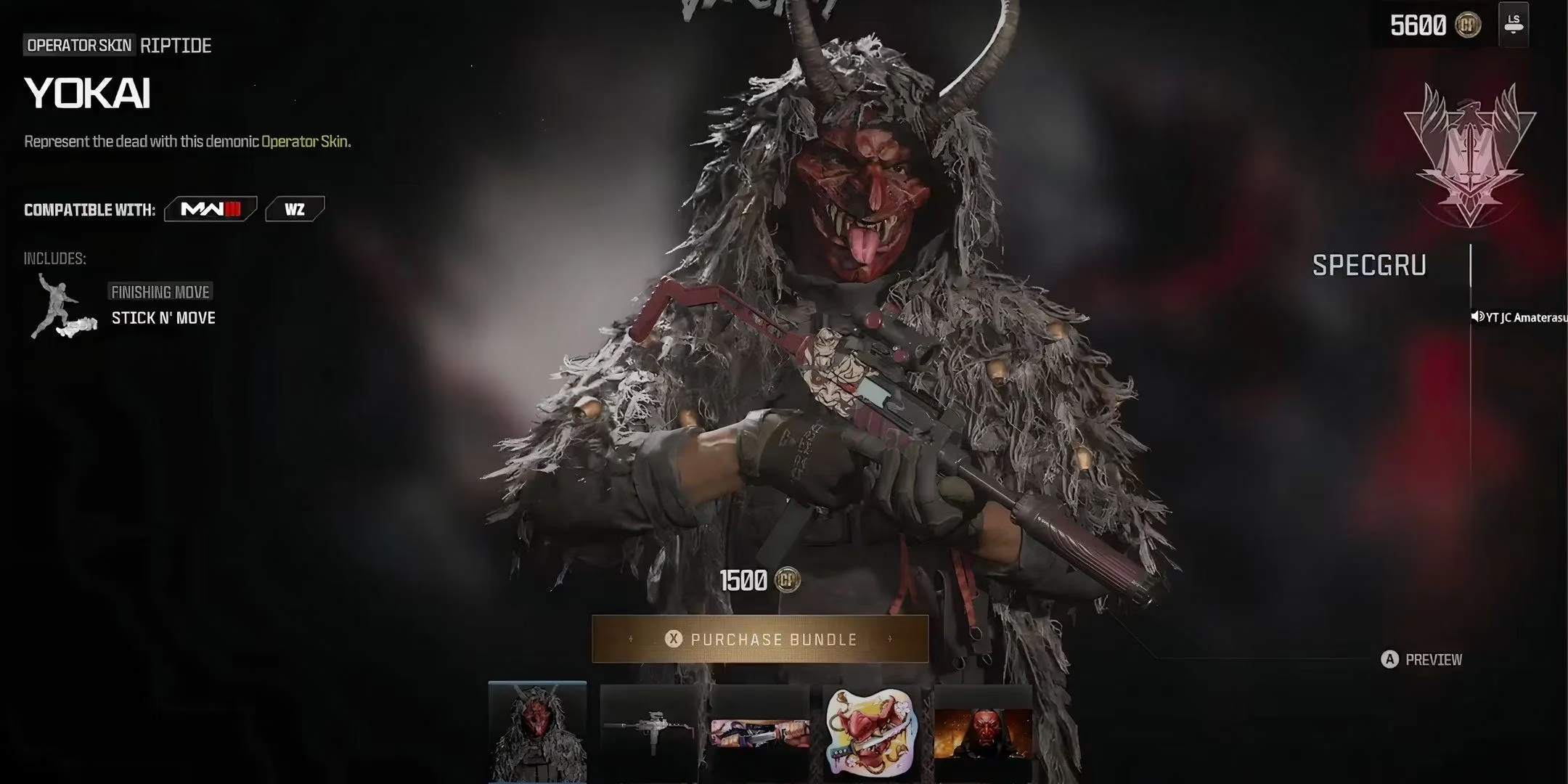
Let's talk about a virtual ghost haunting the gaming world. Picture this: it's 2026, and the lines between human creativity and machine generation are blurring faster than ever. A recent bombshell report revealed that Activision, the giant behind Call of Duty, quietly released a weapon skin designed not by a passionate artist hunched over a tablet, but by lines of code and algorithms. We're not talking about some experimental tech demo; this was a real, purchasable item in Call of Duty: Modern Warfare 3—the Yokai's Wrath bundle. Players forked over 1,500 COD Points (that's real money, honey!) for a skin with an otherworldly origin story. Talk about a plot twist nobody asked for.
So, what's the deal with this Yokai skin? According to an in-depth investigation, the eerie, spectral design of the Yokai operator skin was crafted using generative AI tools. The whole bundle dropped back in late 2025, offering players a themed skin, a weapon blueprint, and some extra flair. But the real kicker? Activision had previously promised its developers and the community that AI would only be used for internal brainstorming and concept art—never for the final, shiny assets you actually buy. Spoiler alert: that promise went up in smoke faster than a frag grenade.
This isn't just about one spooky skin, though. It's a symptom of a much bigger shift happening behind the scenes. The report paints a... let's say, challenging picture for human artists in the industry. Following massive layoffs that hit 2D concept artists particularly hard, the remaining teams found themselves in a tough spot. They were, according to sources, "forced to use AI to aid in their work." Imagine that—mandatory trainings on AI tools becoming part of your job description, not as a helpful assistant, but as a replacement for human intuition and skill. The vibe? It's less 'creative partnership' and more 'adapt or get out.'
Here’s the real tea on the industry's AI push:
-
Human Jobs vs. Machine Speed: The drive for efficiency and cost-cutting is real. AI can churn out iterations at a pace no human can match, but at what cost to soul and originality?
-
The Transparency Problem: Players had zero idea they were buying an AI-generated product. Where's the label? The disclaimer? It feels a bit like buying a handmade craft only to find a 'Made by Robot' stamp on the bottom.
-
The Ripple Effect: This controversy didn't happen in a vacuum. It erupted just as actors' unions were finalizing historic strikes to protect human performers from having their voices and likenesses cloned by AI. The gaming world is now a major battleground for this ethical war.
And what about the players who bought the Yokai bundle? As of now, it's radio silence on whether refunds are on the table. It raises a gigantic question: if a skin isn't crafted by human hands, does it lose its value? For many collectors and fans, the story and soul behind a design are half the appeal. An AI might replicate a style, but can it replicate the passion, the late-night coffee-fueled inspiration, the human touch? That's a big, fat... maybe not.
Looking ahead to 2026 and beyond, the Yokai skin saga is clearly just the opening scene. The fight over generative AI in games is heating up, with studios, artists, actors, and players all trying to figure out the new rules. Will AI become a standard, uncredited tool? Or will there be a pushback, a demand for human-made art in our virtual worlds? One thing's for sure—the next time you see a cool new skin in your favorite shooter, you might just pause and wonder... who, or what, really made it? The future of game art is here, and it's asking us some very uncomfortable questions.
The Bottom Line:
| The Promise | The Reality | The Unanswered Question |
|---|---|---|
| AI for concepts only | AI used in final, sold products | How many other bundles are AI-made? |
| Supporting artists | Layoffs + forced AI training | What is the true value of human art? |
| Transparent development | Players unknowingly bought AI content | Will there be accountability or refunds? |
The conversation is just getting started. Where do you stand?
Recent trends are highlighted by GamesIndustry.biz, which regularly reports on the evolving relationship between technology and creative labor in the gaming sector. Their coverage of AI integration in game development underscores the growing tension between efficiency-driven automation and the preservation of artistic integrity, echoing the concerns raised by the Yokai skin controversy in Call of Duty: Modern Warfare 3.