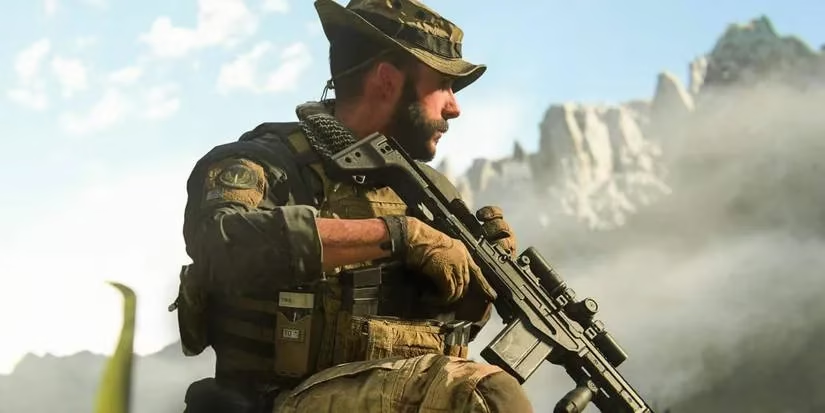
I still remember the wave of cautious optimism that swept through the Call of Duty community back in 2023 when Sledgehammer Games lifted the curtain on Modern Warfare 3. The promise of slide canceling, a higher time-to-kill, and the return of classic maps tugged at nostalgia. However, underneath the hype, one conversation dominated forums, Twitter threads, and Discord servers — the aggressive grip of skill-based matchmaking (SBMM). Now, several years removed from that launch, the debate hasn't faded. If anything, the handling of SBMM in 2023's Modern Warfare 3 set a benchmark that subsequent entries struggled to match.

The loudest complaint back then, and one that remains valid today, centers on how SBMM punishes casual play. For the vast majority of players who jump into a match after a long day at work, a couple of good games shouldn't feel like a one-way ticket to a sweat-fest. After performing well in just one or two lobbies, the algorithm would aggressively yank you into a world where every opponent possessed the reflexes of a CDL pro. This created a toxic cycle: have fun, get punished, then either log off or reverse boost just to feel normal again. It completely undercut the purpose of Ranked Play modes, which were specifically designed for players seeking that high-stakes environment. By blurring the line between casual and ranked, SBMM eroded the identity of the core multiplayer playlist.

Player retention took a massive hit because of this hyper-aggressive system. During the lifecycle of Modern Warfare 2 (2022) and Vanguard, I witnessed friends quitting after barely a month. The pattern was painfully predictable: after release, the casual player base would nosedive as soon as SBMM started demanding 100% focus for every single gunfight. Whether you were grinding camos or simply trying out a new tactical rifle, there was no room to breathe. Streamers echoed the sentiment daily, and their audiences watched as content creation shifted from entertaining gameplay to pure frustration. The hope surrounding Modern Warfare 3 was that this exodus wouldn't repeat itself, and that the player count would remain healthy far beyond the launch window.
Map variety made the SBMM issue even more pronounced. Call of Duty lobbies range from frantic 6v6 on compact layouts to sprawling 10v10 moshpits. When the matchmaking algorithm ignores loadout experimentation and forces you into a tough lobby on a larger map, the experience becomes tedious. You spend minutes hunting for opponents only to be picked off by a seasoned quickscoper hiding in a window. Toning down SBMM, even slightly, would make these mismatches more bearable. Instead of feeling completely outclassed, average players could hold their own at range or learn the flow of a map without being deleted the moment they peek a corner. That breathing room is essential for keeping engagement high across all map rotations.

Progression systems also suffered under the weight of strict matchmaking. Leveling up weapons for that perfect attachment setup becomes a chore when you're constantly facing opponents who already have meta builds fully unlocked. Double XP tokens and Zombies mode offered some refuge, but the primary loop demanded competent multiplayer performances. In tougher lobbies, your kill/death ratio plummeted, and weapon XP crawled to a halt. An adjustment to SBMM would have removed a major hurdle from the grind, making it less punishing for newcomers and weekend warriors alike.
The interaction between time-to-kill (TTK) and SBMM was another pain point. In Modern Warfare 2 (2022), a lightning-fast TTK turned every encounter into a who-sees-who-first simulator. If you dared to use a marksman rifle or sniper, you were at an immediate disadvantage against run-and-gun SMG players who could melt you across the map. Paired with tough lobby placement, trying to level an off-meta weapon felt like self-flagellation. Modern Warfare 3's slower TTK was a welcome change, but without a corresponding relaxation in SBMM, players still felt cornered. A gentler matchmaking curve would have encouraged genuine loadout diversity, letting people experiment with tactical rifles, shotguns, or even pistols without tanking their stats.

Looking back from 2026, the conversation around SBMM in Modern Warfare 3 proved prophetic. The game's initial player base remained stronger than its predecessor precisely because the matchmaking, while still present, felt toned down enough to let casual fun coexist with competitive integrity. It wasn't removed entirely — that was never realistically on the table. But the feedback from the community in late 2023 forced developers to find a middle ground that valued player enjoyment over strict engagement metrics. Even the Zombies mode, which boasted the largest map ever for the mode, benefited indirectly, as players could freely level weapons before dipping into multiplayer without fear.
Ultimately, the handling of SBMM in Modern Warfare 3 became a case study in how live-service shooters can balance accessibility and challenge. While newer titles have since experimented with their own algorithms, the lessons from 2023 remain crystal clear: when you give players space to breathe, they stick around. They buy battle passes, they recommend the game to friends, and they keep the servers alive. The call for a less punishing system wasn't about wanting easy lobbies — it was about restoring the sandbox spirit that made Call of Duty a household name.