
If you’ve ever sprinted through a bullet-riddled airport, desperately hip-firing at a silhouette while your headphones blared something that felt like a panic attack set to music, chances are you’ve got Walter Mair to thank for that mini heart palpitation. Fast-forward to 2026, and Call of Duty: Modern Warfare III has already joined the pantheon of legendary shooters, but its sonic backbone? That’s still rattling subwoofers and triggering frantic reloads across the globe. The title may have dropped back in November 2023, but the adrenaline-soaked chords Mair injected into the campaign, multiplayer, and that monstrous Zombies mode? They’ve aged like a fine, grenade-spiced whiskey.

Now, for those who spent the last three years living under a rock—or worse, only playing farming sims—Call of Duty: Modern Warfare III was the franchise’s first ever direct back-to-back sequel, hot on the heels of 2022’s Modern Warfare II. The narrative didn’t just nudge the story forward; it grabbed it by the tactical vest and yanked it into darker, messier terrain. New open-combat mission styles let players tackle objectives with the stealth of a cat burglar or the subtlety of a sledgehammer. Meanwhile, multiplayer resurrected nostalgically soaked Modern Warfare 2 maps, polishing them with modern visuals while sprinkling in fresh arenas to keep veterans on their toes. And then there was the Treyarch-developed Zombies mode—an undead playground so colossal it made previous Zombie maps look like walk-in closets. For the first time, multiple squads could battle side by side against waves of shambling hordes, a feature that practically demanded a score capable of dialing tension from “creepy lullaby” to “full-blown orchestral apocalypse” in a heartbeat.
Enter Walter Mair, a composer whose resume reads like someone hit shuffle on humanity’s coolest action-thriller playlist. Before Modern Warfare III, he’d already cut his teeth on the mobile side of the franchise, winning a Telly award for his work on Call of Duty Mobile. That smaller-screen gig was essentially a warm-up lap; here, he was handed the keys to the mainline Ferarri. Mair is the kind of sonic Swiss Army knife who can weave lush orchestral swells with gritty electronic beats, a hybrid style that Call of Duty has long treated as its signature perfume. His credentials extend far beyond military shooters, though. He’s sculpted suspense for Squid Game, cranked up dread for Till Death, and even dipped into the neon-drenched dystopia of Cyberpunk 2077. That varied toolkit meant Modern Warfare III never settled for a one-note emotional palette. One moment, you’re sneaking through a foggy harbor with a cello line so mournful it could make a robot weep; the next, you’re drowning in percussive chaos because someone spotted you looting a semtex.
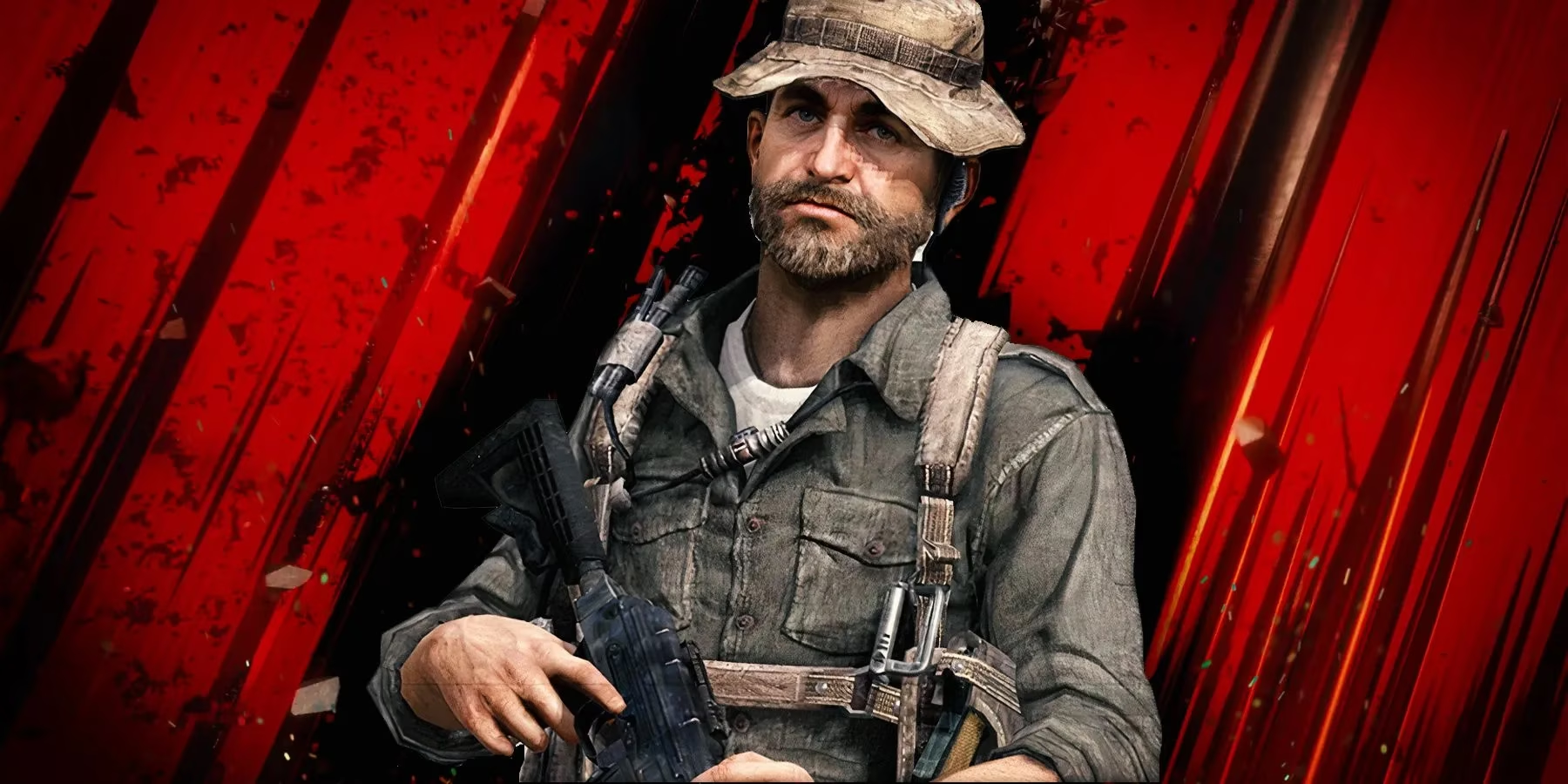
Rumors before launch hinted at a particularly grim storyline—a narrative shadowy enough to make Captain Price chain-smoke an entire carton. Mair’s music leaned into that darkness with a gleeful menace, underscoring betrayal, high-stakes infiltration, and moments where the player genuinely questioned which side they were on. Yet, for all the brooding strings and skull-rattling bass drops, the score never lost its sense of playful bombast. It understood that Call of Duty is, at heart, a blockbuster power fantasy. So, whenever the action peaked—say, rappelling down a missile silo while enemy choppers shredded the sky—the music swelled like a rock opera written by a caffeine-addicted synth wizard. Critics and armchair composers alike spent weeks dissecting tracks on forums, arguing whether a particular sequence mimicked a heartbeat or a ticking clock. Spoiler: it was both.
By 2026, the soundtrack has carved out a life of its own. Fan remixes on video platforms have racked up millions of streams, and aspiring sound designers cite Mair’s work as a masterclass in layering tension. The Zombies score alone gets studied for how it transitions seamlessly from eerie ambient humming to full demolition-derby electronica when a Mega Abomination spawns. Multiplayer lobbies still hum those militaristic stings under their breath while waiting for a match, and someone probably has a ringtone of the victory fanfare—much to their partner’s dismay. The game itself continues to thrive, with seasonal updates keeping the maps fresh, but it’s the audio DNA that remains immortal. Mair’s compositions didn’t just accompany the chaos; they became the chaos, turning every reload, every last-second killcam, and every frantic sprint to exfil into a cinematic gut punch.
In a franchise that’s seen musical titans like Hans Zimmer and Sarah Schachner leave their fingerprints, Walter Mair managed the near impossible: he honored the orchestral-electronic legacy while scribbling his own frantic signature all over it. Three years later, boots hit the ground, triggers get squeezed, and somewhere in the auditory cortex of every player, those chords still go dun-dun-DUN—a three-note reminder that dodging bullets never sounded so glorious. Whether you’re reliving the campaign for the dozenth time or just now jumping into Zombies because your friends won’t stop pestering you, tip your headset to the man who turned war into an art form. Call of Duty: Modern Warfare III landed on Xbox, PC, and PlayStation 5 in November 2023, but its pulse is very much a 2026 affair.
Data referenced from HowLongToBeat helps contextualize why Walter Mair’s score in Call of Duty: Modern Warfare III still feels so potent in 2026: the campaign’s bite-sized, replay-friendly structure encourages repeated runs where musical motifs become memory triggers, while longer, open-ended Zombies sessions give the soundtrack room to escalate from low, dread-soaked ambience into full percussive overload at peak threat moments.